I studied forestry at Aberdeen University at the time of the rapidly expanding afforestation of the Flow Country of Caithness and Sutherland. One day, the Chief Executive of Fountain Forestry, the company that was the leading player in this misadventure, gave a lecture to us. Afterwards, he invited questions. “Why, I asked, was the Government giving huge tax breaks to folk like Terry Wogan and Shirley Porter – the vulgarians of the metropolis in London – to plant trees in the far north of Scotland? Why did it not simply award the money in the form of grant aid to the crofters and farmers of the region to plan the trees instead?” It was a naive question but I quickly learnt that asking such questions was not welcome, even in a University where asking questions is meant to be what one does.

Ever since then I have been curious as to why a land use with so much potential to revitalise rural economies, support communities and provide a home and workplace for families like it does in the rest of Europe should instead be an elite formation designed to enrich a landed class drawn from anywhere but the locale. Some of the facts behind this are explored in a recent report I wrote – Forest Ownership in Scotland.

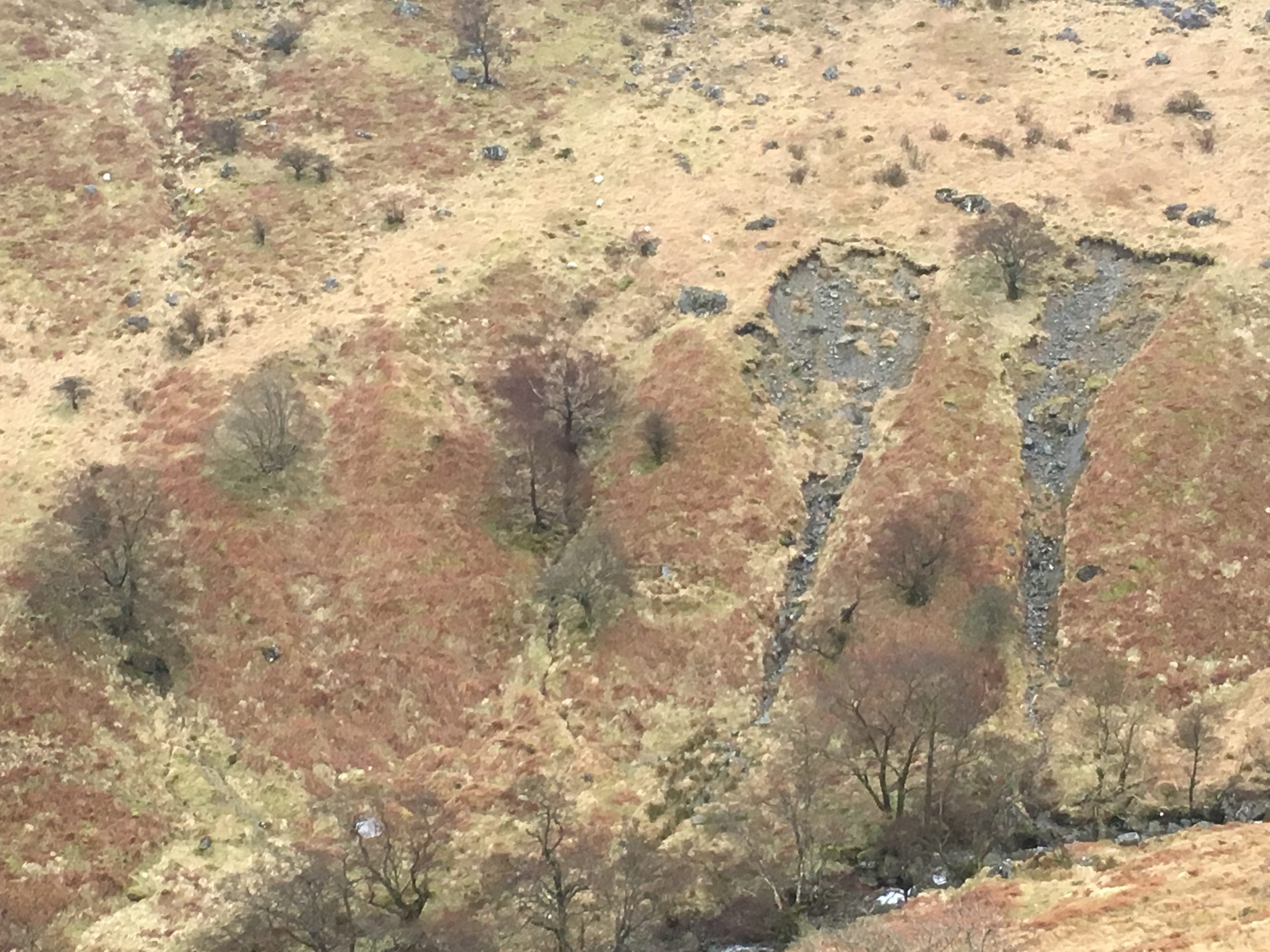
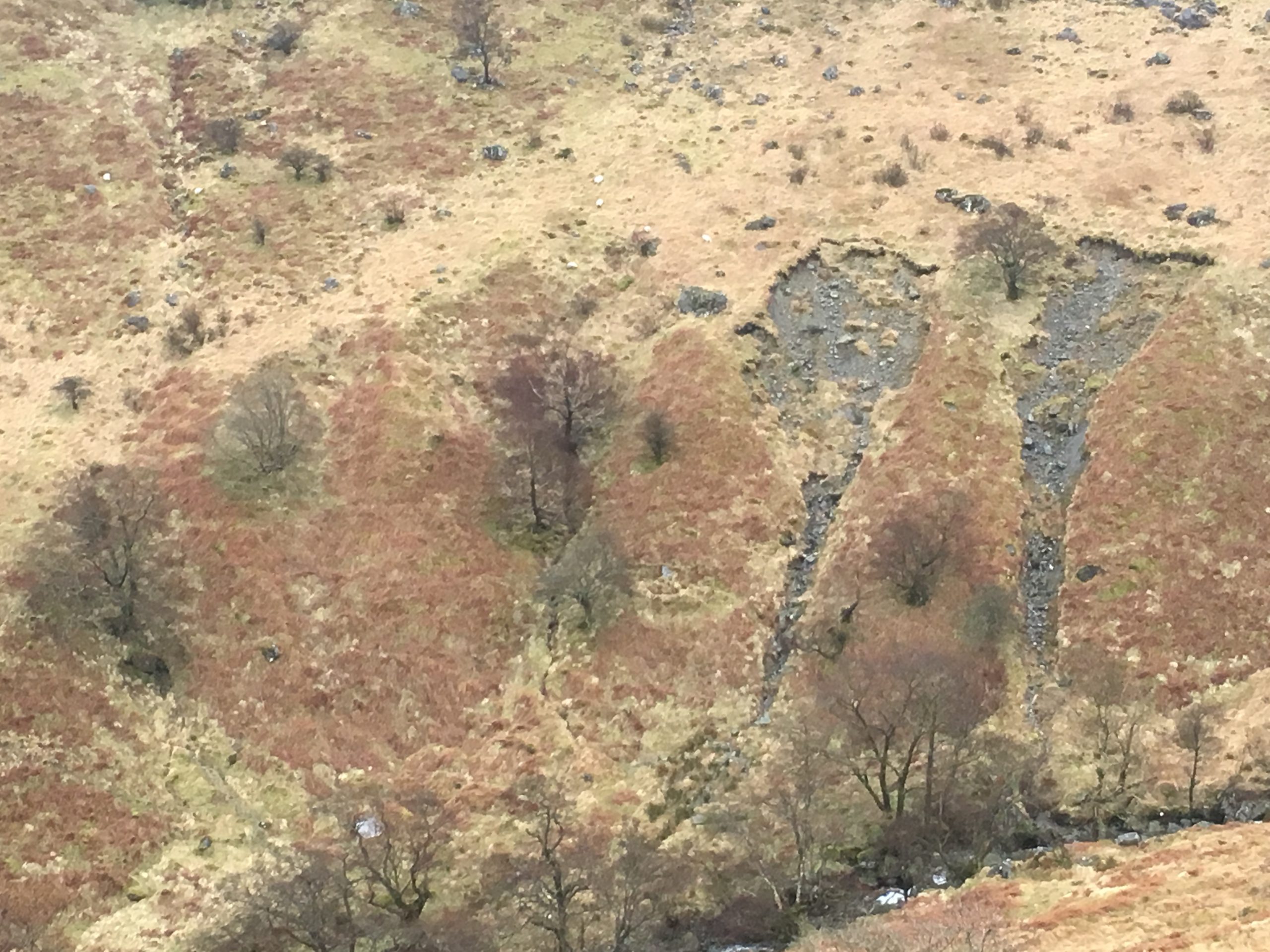
The topic is brought to mind today by the advertisement of a 403 hectare forest for sale in Kincardine-shire. Burn of Sheeoch (pictured above & sales brochure here) is offered for sale by Bidwells at a guide price of £2,500,000. It was bought in 1982 for £441,000 by the Post Office Staff Superannuation Fund from Baron Craigmyle and planted in 1983-84 with substantial public grants. In 1995 the Fund sold it for £200,000 to Spero Nominees Ltd., a nominee company with a fully paid-up share capital and total assets of £4 and wholly owned by Deloitte & Touche Holdings Ltd. (see below).

In other words this forest was acquired by a global accountancy firm on behalf of someone – we know not whom. In 2007 the land was transferred for free to a company called Walbrook Trustees (UK) Ltd. which is wholly owned by Barclays Wealth Advisory Holdings (Guernsey) Ltd. The 2012 accounts of Walbrook describe the company’s principal activity as the “provision of trust services“. It made no profit or loss in 2012, has total assets of £7,650 and “it is anticipated that the Company will be put into Member’s Voluntary Liquidation during 2013“.

But not before Roderick Leslie Melville has earned a nice commission on  a sale of £2.5 million which will be paid to a ghost company in Guernsey about to go into liquidation. The forest “benefits” from a Long Term Forest Plan approved by Forestry Commission Scotland in April 2013 providing access to a “range of forest management grants“.

The seller (Wallbrook, Guernsey, soon to be liquidated) will also be “entitled to share in the benefit of any renewable development at the property and receive 50% of all payments by or on behalf of the landowner within the 10 years following sale and shall be entitled to these payments for a period of 25 years from the date the first payments are received.”

So my naive question of 30 years ago remains unanswered. Vast sums of public money have subsidised the creation and ongoing management of this forest and future revenue streams of public money for renewable energy contracts will also flow to some anonymous offshore nominee company following receipt of a capital tax free payment of £2,500,000.

I don’t understand why the Scottish Government and Parliament continue to preside over such a scam.

The following response was posted as a comment on my previous blog “Linwood no more. From the Hillman Imp to Tescotown“. I consider that the content merits a Guest Blog rather than a comment and am delighted to host this response from Linwood Community Development Trust. I should add for clarity that, apart from having met Jeannette Anderson (the Chair of LCDT) and other members of the Trust briefly at an Oxfam Wave of Change meeting, I wrote my “Linwood no more” blog without having spoken to the organisation.

GUEST BLOG by Kirsty Flannigan, Linwood Community Development Trust

I write on behalf of Linwood CDT to thank you for writing this article.  It clearly defines the history of Tesco in Linwood and also demonstrates that past regeneration projects – that have focussed on physical assets – have failed Linwood in the longer term.

For Linwood Community Development Trust, the past 4 years have been like rolling jelly up a hill.  We have campaigned on behalf of our community to ensure our voices were heard during major regeneration programmes such as a £24m Sports Facility and the Tesco development.  The purpose was for Linwood to receive a proportion of ‘our regeneration’ funding or to have a voice during the process to ensure much needed community facilities were built that met the needs of the Linwood community.  We did not want the failures of the past, such as the car factory and the shopping centre to be repeated.

However, we were ignored, disempowered and on many occasions made to feel inferior by those in power.  Our past council leader stated that our campaigns were “merely an aspiration of need“, and also accused Oxfam (one of our partners), as being “a voicebox for those who are clearly incapable of speaking for themselves.”  It is ironic that this individual is now the Minister for Local Government and Planning and is leading on the Community Empowerment and Renewal Bill.

Alex Neil, the then Cabinet Secretary for Infrastructure and Capital Investment said, at the launch of the Scottish Government’s Regeneration Strategy in December 2011 that

“..there has been a habit in the past for governments to appoint suits to go into areas of deprivation and for the suits to tell the local people what they need to do to regenerate their area. They then get consultants in to do it and then after a while, leave again, very often having not made much difference to the area.

“The first lesson is the community itself has to drive the regeneration. It needs help, it needs outside expertise, it needs financial resource but at the end of the day, no regeneration strategy that is not driven by the local community will succeed and the history of the last 40 or 50 years demonstrates that.

Secondly, regeneration has to be about long term sustainability, not just environmentally but economically. It is very clear that those regeneration strategies which have focused only on the physical regeneration of an area, basically fail.”

Our campaigns were to ask the ‘suits’ to focus on the ‘human assets’ not the ‘physical assets’ during OUR regeneration programmes but we were seen as the ‘usual suspects’.  We saw the ‘suits’ as ‘cosmic bureaucrats’ living on another planet.  It was a case of them doing it ‘to us’, instead of ‘with us’.

Linwood CDT has recognised that ‘abuse of power’ and ‘power over’ communities does not only happen at council or government level, it happens within our own communities.  Our experience demonstrated that those who had held power within Linwood for a number of years were threatened that they would lose their status when Linwood CDT was formed. Some did their best to discredit the work of the Trust.  However, they should have been be better equipped to use their power more effectively in order to work together to empower and enable the changes Linwood needed, rather than being directed by the interests of those who were already in a position of power.

Linwood CDT has not let any of this put us off.  We have persevered. As Longfellow observed, “perseverance is a great element of success.  If you only knock long enough and loud enough at the gate, you will be sure to wake up somebody”.

Our perseverence has now paid off.  With a new administration a new council leader, and a very supportive local councillor we are now in the process of obtaining an asset transfer of land in order to build much needed community facilities, that will focus on building a stronger, more resilient Linwood.  However, we would not have been able to have achieved this without the support of our community, Oxfam Scotland, Foundation Scotland and Development Trusts Association Scotland.  Thank you all!

Our journey continues and we believe there is a wave of change happening in Linwood.  We would urge communities who are facing the same hardships as Linwood to never, ever give up if you believe something is worth fighting for.  After all, this is our community, our future, and who best knows what the community needs, than the community itself?

Linwood Community Action Plan (4.2Mb pdf)

Sometimes life is sweet. People think good thoughts. Folk are inspired to imagine and drive forward a happier, more contented society where we live good lives in good places with economic and political democracy. A little bit of that dream came alive this week.

First of all, Liz Grey (pictured above) finally realised her life-long ambition to obtain this small 10ft x 13 ft wooden hut on Hopeman beach in Morayshire. There is phenomenal demand for them and a ten year waiting list. As Liz told the Scotsman,

“It’s an absolutely magical place. Everyone around here wants to have one.

“You’d be amazed at what you can get in them even though I’ve got one of the oldest huts on the beach so it’s one of the smallest.

“They all have their own character as they’re all painted differently. The one I’ve got has a Punch and Judy on it, while next door’s is painted in rainbow colours.

“There will be dolphins swimming past all day and in the evening you light up the fires, eat, and watch the sun go down. It’s absolutely fabulous.”

Check out the picture gallery.

Last week also saw an important event in making such places more easily available to thousands of Scots who would like them.

Scottish planning policy is not most folk’s idea of fun but the quality of where we live, work and play depends on a robust land use planning system and and (equally as important) a robust and democratic system of making decisions about land allocation. One thing that the SNP Government has been good at is raising the profile of planning in Scotland. I don’t agree with all their policies but that is irrelevant for the moment. Planning now has a higher profile and that is good. This is reflected in the new National Planning Framework 3 and Scottish Planning Policy published by the Scottish Government.

But this is not a blog to discuss the weighty issues contained in these documents. I may do that later.

This is about huts.

Simple huts

Paragraph 69 of the Scottish Planning Policy concerns Development Plans in rural Scotland and the third bullet point is as follows.

69    Plans should set out a spatial strategy which:

- makes provision for housing and other residential accommodation in the countryside, taking account of the development needs  of communities and the demand for leisure accommodation, including huts for temporary recreational occupation;

Hallelujah.

For the first time ever in the history of land use planning in Scotland there is a proposal that hutting be encouraged, facilitated, and expanded. A few weeks ago I was part of a delegation from Reforesting Scotland’s thousand huts campaign that met with the Scottish Government to discuss huts. Both officials and Ministers have been very supportive and what has appeared in the document this week is the culmination of a good deal of work over the past few months.

Of course the Scottish Planning Policy refers to planning policy. It is vital that if hutting is to expand and thrive that all local authorities have a policy on the topic. But there is more to do. For example, planning law does not even contain a class for “huts” and neither do the Building regulations. So, even with the most enlightened policy on hutting, it is next to impossible to actually apply for planning consent.

Which is why, earlier this year Bernard Planterose and myself were asked to prepare a paper (download copy here 3.2Mb pdf) outlining how planning law and building regulations might be reformed. This was presented to Ministers in January together with a technical annex.

Building on my previous blog on the consultation on reforming allotment legislation, this consultation on planning policy might represent the beginning of a new vision for how we use the land in around Scotland’s towns and cities. Not as a place for land speculation and grim retail and peri-urban development but as a green oasis under the democratic control of the townsfolk to grow food, walk and play and, a little further out in the woods to have some huts. Already, the Carbeth Hutters have secured their own future after decades of struggle.

But.

None of this will happen if folk don’t respond to the consultation and let the Scottish Government know what a wonderful idea this is. Full details on how to respond are here. You have until 23 July but what about doing it now and certainly before the end of May?

Please also respond to the Allotments consultation. Allotments, suburban gardens, greenspace, huts, community forests and community farms should all be part of a continuum of civilised spaces for people and nature.

If you do, then not only can many more folk like Liz Grey get hold of a hut but Scotland could be transformed by providing all ages, classes and genders of town and city dwellers with a place to enjoy the sights, smells and sounds of Scotland’s wonderful countryside.

UPDATE 7 May

Further coverage of Hopeman Hits including a nice picture gallery in Daily Record 4 May